
Polenta with Roasted Bell Peppers
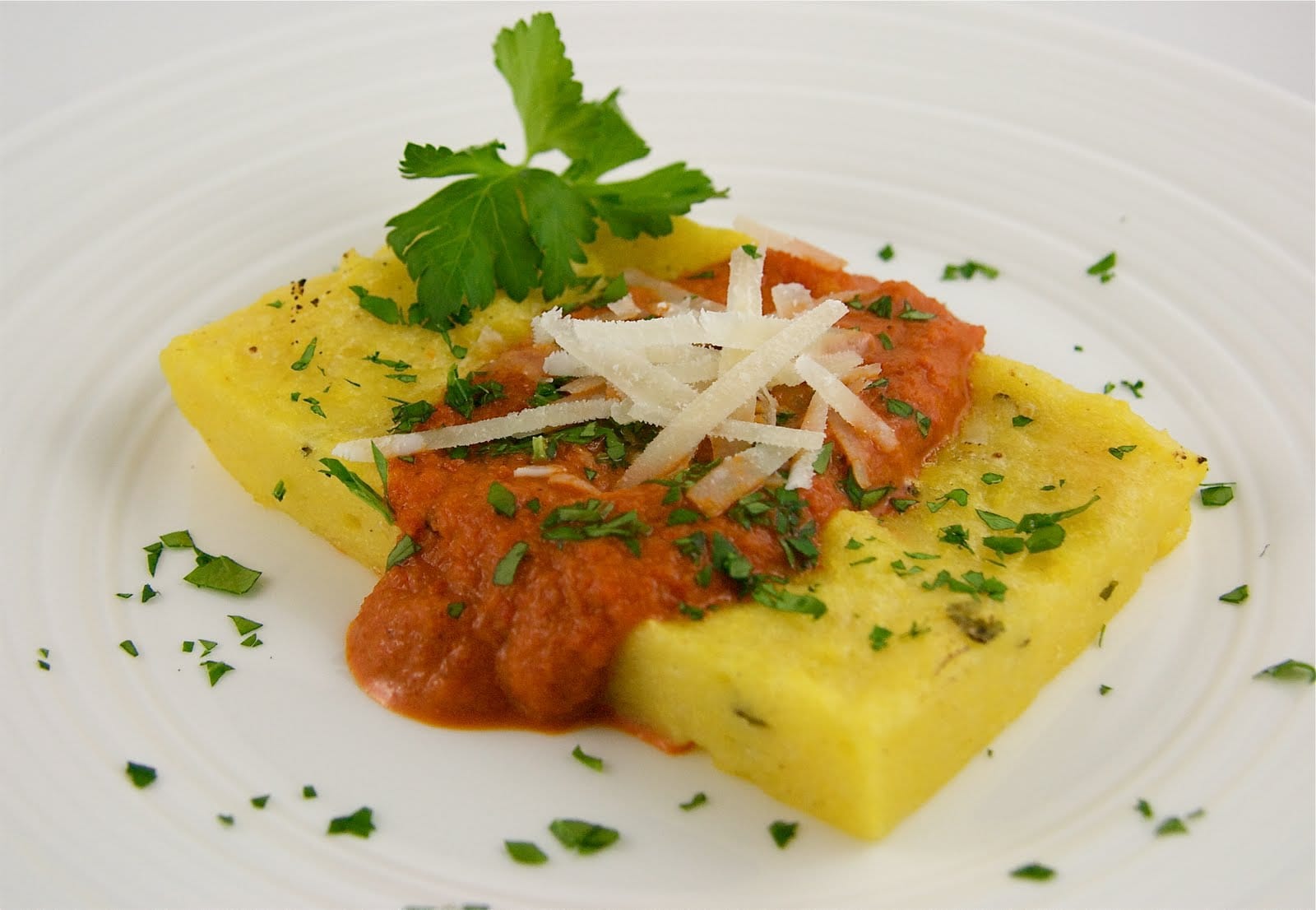
I have been a huge fan of Dr. Andrew Weil for quite some time not only for his alternative ways for a healthy lifestyle, but I also enjoy trying his recipes. Polenta is made with ground yellow or white cornmeal (ground maize) originally made with Chestnut meal in ancient times. It can be ground coarsely or finely depending on the region and the texture desired. As it is known today, polenta derives from earlier forms of grain mush (known as gruel or porridge) commonly eaten in Roman times and after. I love polenta and have found many ways to use this humble staple. Red bell peppers are an excellent source of Vitamin C & A with rich sources of lycopene (may help reduce the risk of cancers of the prostate, bladder, cervix and pancreas).
If you like this recipe, then you might also like Grilled Cheese & Basil Polenta, Blue Cheese Polenta with Balsamic Mushrooms, Polenta Pizza, Seafood Stew with Smoked Chili Aioli on Soft Polenta, Grilled Polenta Vegetable Sandwich, Veal & Zucchini Involtini with Polenta, or Asparagus with Anchovy Butter on Firm Polenta.
Serves 4-6 (as a side)
recipe adapted from The Healthy Kitchen
print this recipe
POLENTA:
3 cups water
1 cup cornmeal (polenta), medium ground
1 teaspoon sea salt
1 tablespoon finely chopped basil
1/4 cup freshly grated cheddar or Parmesan cheese
1/8 teaspoon hot sauce (such as Tabasco)
2 shallots, peeled and roughly chopped
1/4 teaspoon salt
1/8 teaspoon freshly ground black pepper
ROASTED BELL PEPPER PUREE:
3 large red bell peppers, seeded (about 1 1/2 pounds)
1 1/2 tablespoons extra-virgin olive oil
1 tablespoon balsamic vinegar
GARNISH:
2 tablespoons chopped parsley
1 1/2 tablespoons additional Parmesan cheese
6 fresh basil sprigs
Preheat oven to 200c (400° F).
To make the polenta, bring the water to a boil in a saucepan. Slowly pour in a continuous stream of cornmeal, stirring constantly. Add the salt. Reduce the heat to low and cook uncovered, stirring occasionally, until the polenta begins to pull away from the sides of the pan, about 20 minutes. Shut off the heat and stir in the basil and cheese. Working quickly, grease with olive oil a medium-size (approximately 9 x 7 inches) shallow casserole dish or pan and pour in the cornmeal, spreading it out over the whole surface. Let the polenta set and cool for 1 hour.
To make the roasted pepper puree, cut the sweet red peppers into large pieces. Smear a little of the olive oil over the bottom of an ovenproof casserole dish and lay the peppers inside. Cover and bake for 20 minutes until they become soft. Remove from the oven (leave the oven on to bake the polenta) and let cool. Put the peppers in a food processor and process until smooth. Add the remaining ingredients including all but a teaspoon of the remaining olive oil, and process until thoroughly blended. Scrape the dip into a serving bowl.
When the polenta has cooled completely, cut two vertical lines through it, so you have three rectangles. Make diagonal cuts from corner to corner of each rectangle to make an “X,” creating 4 triangles within each of the 3 rectangles.
Smear some olive oil over a baking sheet and with a spatula remove each of the 12 triangles and arrange them on the sheet, leaving space around each one so that the edges can crisp. Bake on the top rack in oven for 15 minutes, or until browned.
To serve, pour 2 tablespoons of the Roasted Bell Pepper Puree on each of 6 serving plates. Arrange 2 Polenta Triangles alongside, sprinkle some chopped parsley and Parmesan over them, and place a basil sprig on the side.
The Culinary Chase’s Note: Use your imagination when cutting out the polenta. It doesn’t have to be triangles. You can always use cookie cutters if you want that perfect look. The smoky-sweet flavor of the bell pepper puree helps to perk up a rather bland tasting polenta although I think that one tablespoon of balsamic vinegar might be a bit too sweet so experiment according to taste. Enjoy!
By The Glass Tasting Note: Mamma mia, I love polenta. It’s been a comfort food staple in my household for year. I can imagine myself sitting at little trattoria in Turin sipping on a simple Dolcetto D’Alba or Barbera D’Asti eating this dish. The beauty of both Dolcetto and Barbera is they are in rich fruit character and have tangy food friendly acidity which makes them both incredibly versatile food wines. A simple Italian Chianti will also work well here. Forego richer Chianti Classico’s or bigger boned Piedmontese wines such as Barolo or Barberesco at their power and concentration is better suited to game and rich ragus.